
Millions watched it. Then it vanished.
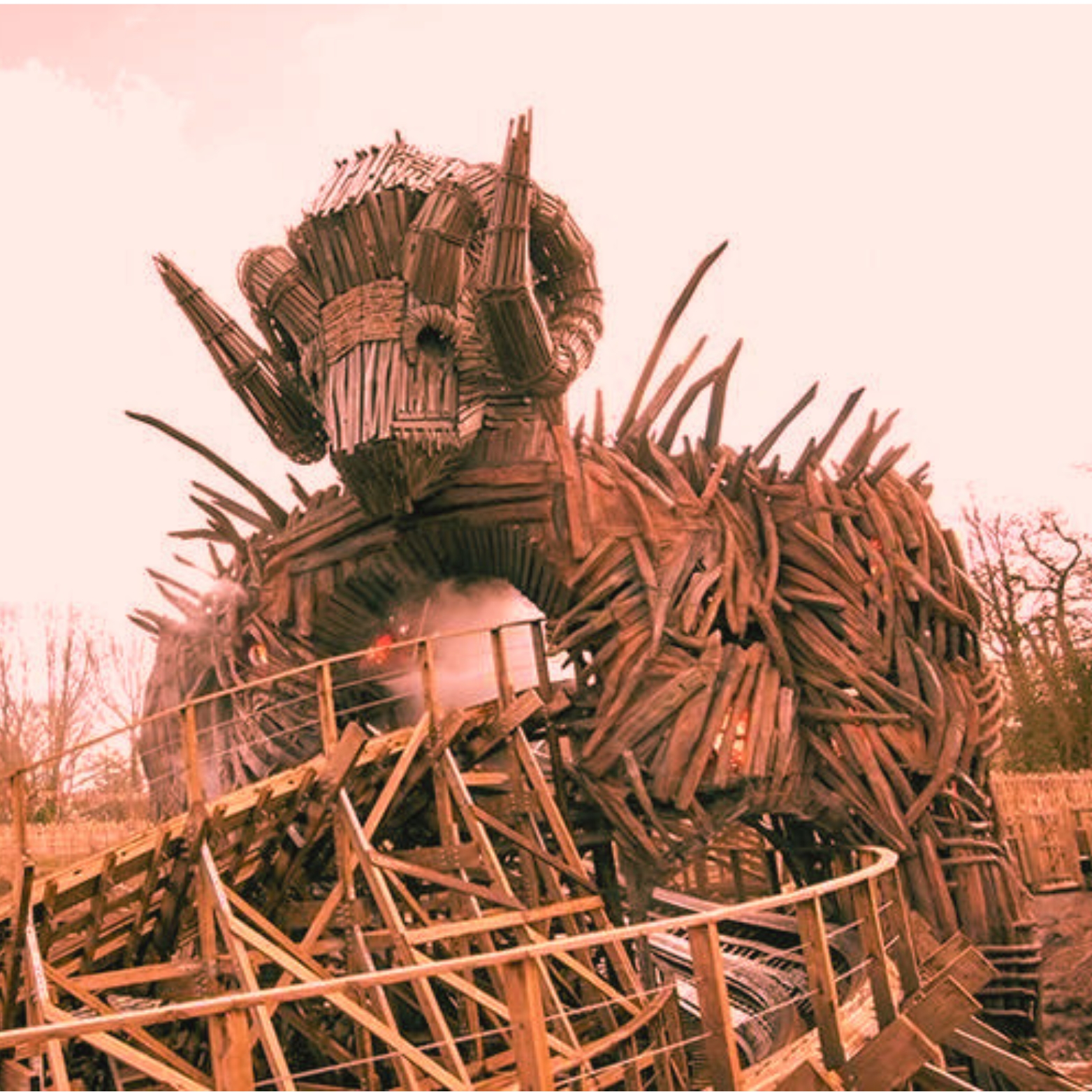
In August 2018, millions of television viewers were given a remarkable behind-the-scenes look at one of Britain's greatest rollercoaster projects. Cameras had been following Alton Towers for months as the park built Wicker Man, its £16m new attraction: a huge wooden rollercoaster from American manufacturer Great Coasters International, wrapped around an enormous flaming wicker figure.
The resulting documentary, Inside Alton Towers, was broadcast on Channel 4 on 23 August 2018. It was an excellent, high-level television production rather than an enthusiast doc or promotional flick. This classic bit of lost theme park history was made by the established production company Films of Record, with Michael Ogden as producer-director. The cameras were there for the construction, the engineering, the testing, the special effects, and, eventually, the opening of the ride.
And then... strangely, it completely disappeared.
INTO THE THEME PARK BERMUDA TRIANGLE
Search YouTube, and you will find the odd clip, references, and people talking about the documentary, but not the actual programme. The original Channel 4 catch-up window has long since expired. Don't bother googling; it's not there! Thoosie Anons on old Reddit threads whisper about 'having a copy on a disk'. It's totally bizarre, in a world where you can watch pretty much anything on YouTube, that it is NOWHERE, not even behind a paywall.
Around 1.7 million people watched it as it aired. Then it was available on All 4 for a further four weeks after its broadcast. If you watched it live (like I was lucky enough to do) or during that window, you were all good. If you missed it, tough luck!
That is a strange fate for a documentary about an attraction that has become one of the defining rides of modern Alton Towers.
Wicker Man was a substantial gamble when it was announced. Alton Towers had never built a wooden rollercoaster before, and Britain had not seen a major new wooden coaster for more than 20 years. At a time when the industry's attention was increasingly focused on ever taller steel coasters, inversions and computer-designed track, Alton Towers chose to spend £16m on something made principally from timber.
It was an old-fashioned idea executed with very modern engineering, and there was a certain madness to it. The attraction was expensive, technically complicated and unlike anything the park had previously built.
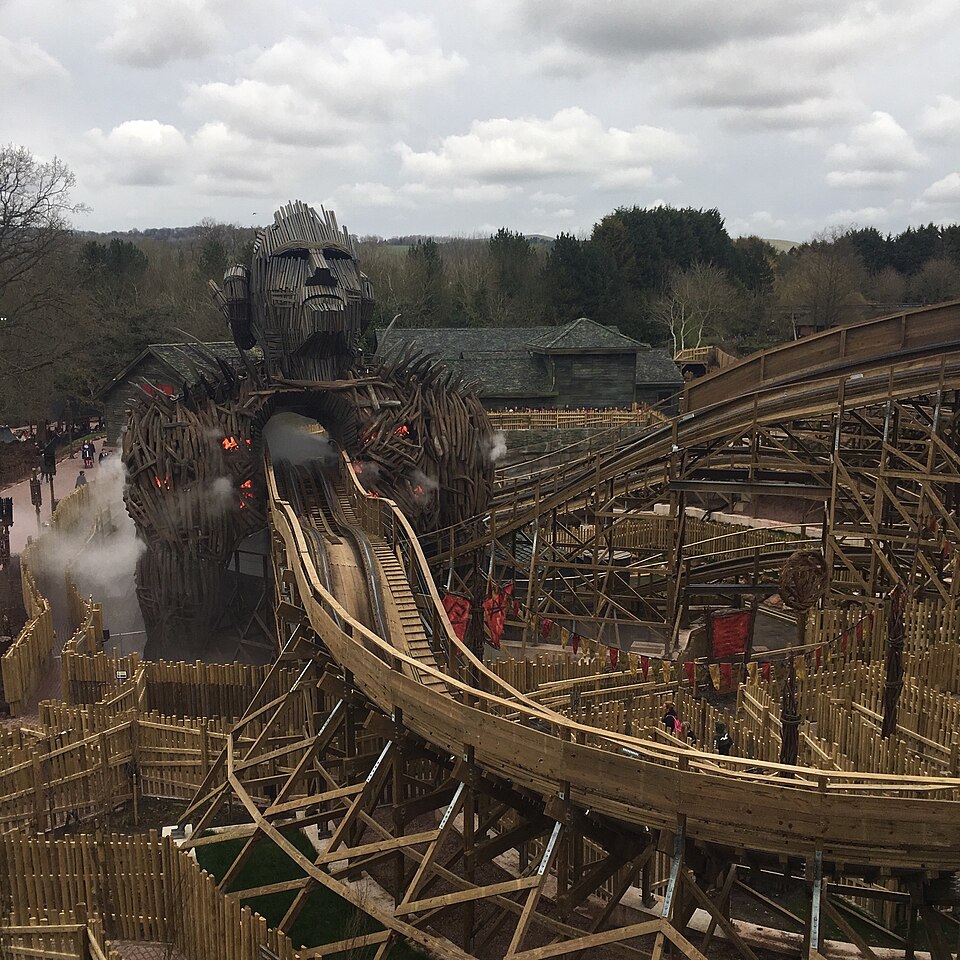
The manufacturer was Great Coasters International, the Pennsylvania-based company that had become one of the leading names in the modern wooden-coaster revival. Wicker Man represented a particularly interesting application of GCI's technology because the designers were not simply reproducing the traditional wooden coaster. They were using the material to create a compact, highly choreographed ride in which the track, the surrounding structure and the effects were all part of the experience.
The name Wicker Man inevitably brought comparisons with the famous 1973 British cult horror film The Wicker Man, starring Christopher Lee. While the ride shares the film's imagery of a giant wicker effigy and fire, Alton Towers has said the attraction is not based on the film. Instead, its story draws on legends, British history, pagan traditions and local folklore around Alton and the surrounding area.
More than 7,500 tonnes of timber went into the attraction, while the track itself uses nine layers of wood, with around 1.8 million screws and 65,000 bolts holding the structure together. The finished circuit is around 618 metres long and was designed around a combination of speed, changes in direction, banking and moments of airtime.
The documentary captured the engineering in considerably more detail than most visitors would ever have seen. GCI senior engineer Adam House and Alton Towers project manager Neil Walker were filmed walking the unfinished track and discussing the ride's geometry, including sections banking to around 50 degrees and the zero-G bunny hop designed to give riders a brief sensation of weightlessness. The lift hill itself changes angle as it rises, while the layout was engineered to create a series of apparent near misses with the enormous central structure.
Then there was the Wicker Man himself: BIG BOB!
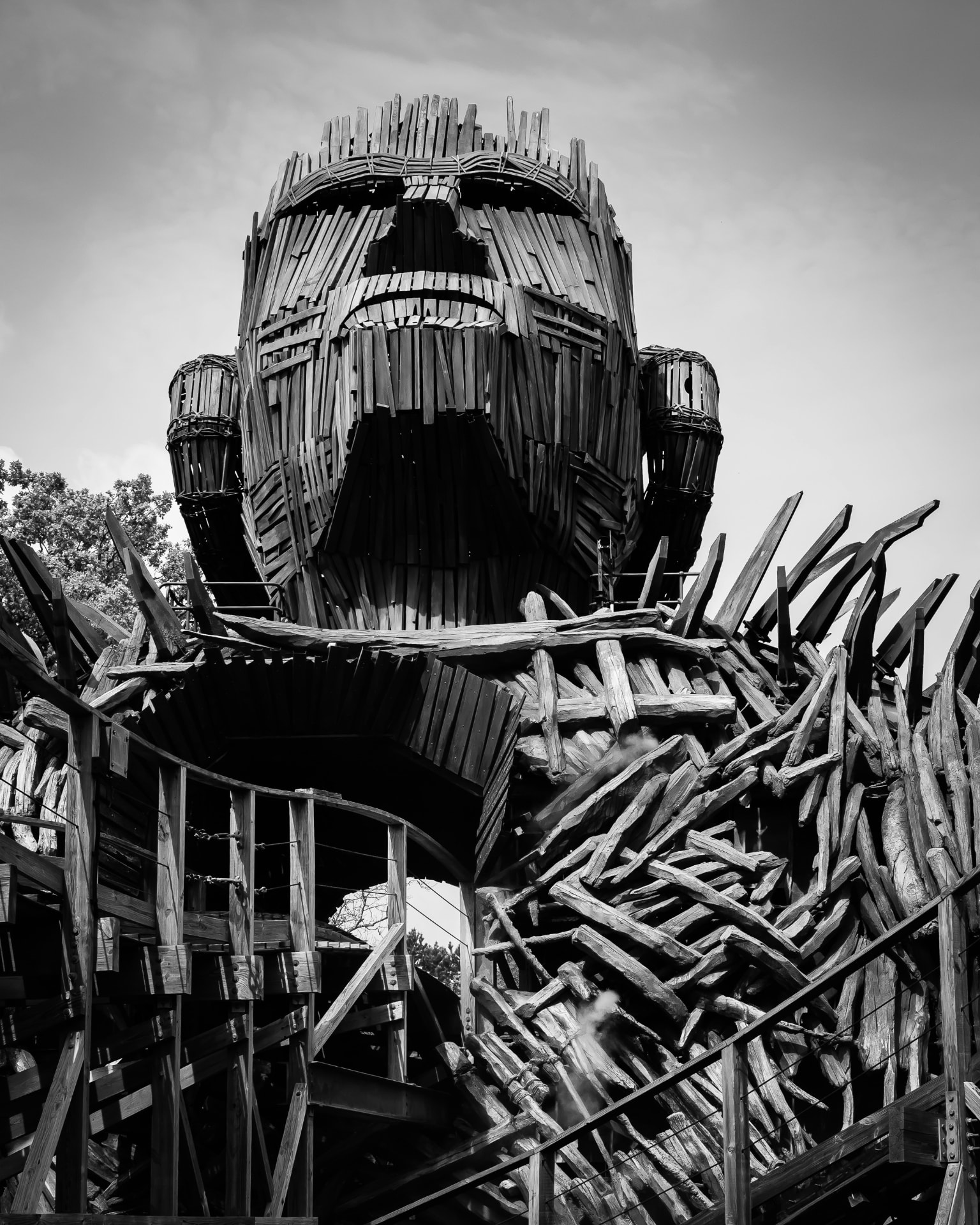
The finished figure stands roughly 20 metres tall and looks as though the rollercoaster is plunging directly into a gigantic wooden effigy. In reality, its construction is considerably more sophisticated. The structure incorporates steel and concrete, while the fire effects are carefully engineered to create the impression of a huge burning figure without simply setting the surrounding wooden structure alight. The effect combines flame and water vapour to create one of the most distinctive moments on a UK rollercoaster.
This is precisely why the documentary is so interesting now. It recorded Wicker Man at a moment when almost none of this existed in finished form. The cameras were watching the wooden supports rise, the track being installed and the giant structure taking shape. They were also there for the less glamorous parts of the project: testing, engineering discussions, delays and the immense pressure of getting a major new attraction ready for the public.
The construction was itself a huge undertaking. Wicker Man is an incredible feat of engineering and is on a completely different level of complexity compared to a steel coaster. The first track was installed in January 2017, and the final section was completed in November, with the project involving hundreds of thousands of hours of work before the ride opened in March 2018. Alongside the television cameras, Time-Lapse Systems had been documenting the construction from the beginning, eventually capturing more than 50,000 individual photographs from the early works through to the launch.
TIME-LAPSE FOOTAGE
That time-lapse is now one of the few substantial pieces of the documentary's visual world that remains readily accessible. It shows something the enthusiast photographs of the period could never quite capture: Wicker Man actually emerging from the ground, stage by stage, until the bizarre combination of timber, steel, track and giant effigy finally resembled the attraction that visitors would know. There is a link at the bottom so Theme Park Daily readers can watch the video.
But Inside Alton Towers went considerably further. Alton Towers described it as the first time in more than 20 years that it had allowed an 'access all areas' documentary crew into the park for this sort of project. The production followed the team for four months and included access to the engineers, designers and people responsible for getting the attraction ready for its opening.
Somewhere, hiding in the Channel 4 basement, the programme still exists. Maybe one day they'll do the right thing and release it again.
That possibility is tantalising because Wicker Man has become more significant with age. What was once simply the new ride at Alton Towers is now a landmark in the British wooden-coaster revival and one of the most recognisable attractions in the park's modern history.
The documentary is therefore no longer merely an old piece of television. It's theme park gold.
And perhaps the strangest thing about its disappearance is how recent it is. This isn't a lost 1970s documentary whose film reels languish in some old director's musty shed. It was broadcast in 2018, in the era of digital television and streaming.
For four weeks, anyone who happened to know about it could watch a professional film crew document Wicker Man from the inside.
Then the window closed. The ride remained. The footage disappeared.
So come on, Channel 4! This isn't like the giant neon shark I won at West Midland Safari Park back in 2012 that's collecting dust in my loft! This is a key piece of UK theme park history.
RELEASE THE FOOTAGE!




💬 COMMENT ON THIS FEATURE